AI Super-Agents automate key steps in IT ticket management by handling intake and triage, verifying policies and permissions, executing tasks across systems, and closing tickets with full audit trails – making the entire process faster, more accurate, and compliant. In fact, the best automated ticketing systems are those that eliminate tickets all together.
Why ticket automation is critical now
The old loop for IT was a model of time waste: employees open a ticket, an agent routes it, and someone else does the work days later. Meanwhile, today’s stack spans dozens of SaaS tools and strict access policies, so that both the volume of each tick and its risk have exploded. This is while analysts estimate that 30-40% of IT tickets are routine and rules-based (password resets, access requests, simple provisioning) – perfect tasks for automation.
In turn, GenAI and agentic automation are transforming this increasingly untenable old work model for IT. Instead of deflecting questions, AI Super-Agents are able to understand intent and independently take action across systems like Okta, Azure AD, Slack, Jira, ServiceNow, Microsoft 365, and Google Workspace. The goal has moved from “faster routing” to “no routing” – at all.
What that yields
40% fewer tickets reaching humans
3–5x faster SLA on common requests
Lower audit risk through consistent policy enforcement and logging
How AI Super-Agents work
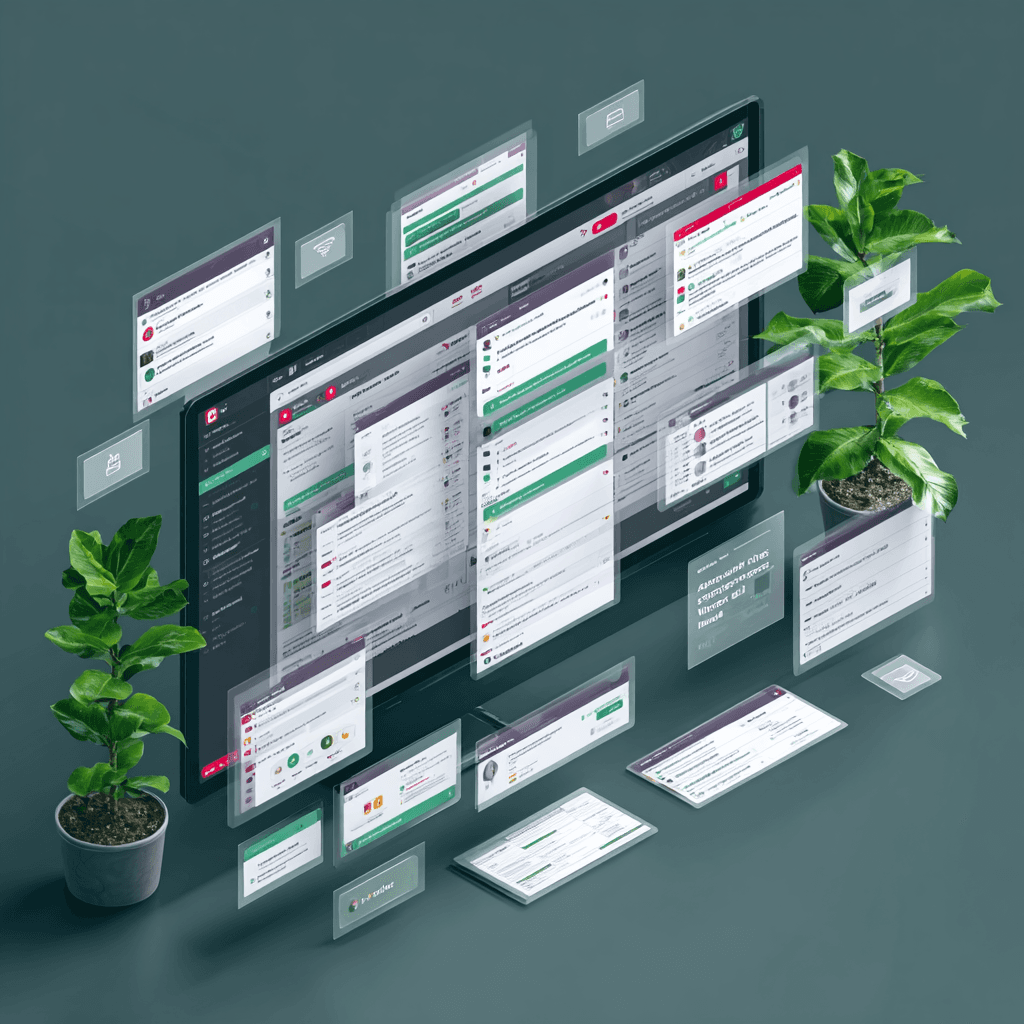
AI Super-Agents now sit on top of ITSM and collaboration tools, transforming them from ticket inboxes into true layers for execution. They are capable of multi-agent orchestration, which means that they coordinate different jobs within a department. For IT this translates to things like sorting support tickets, creating accounts, fixing problems, and sharing data. They allow for tasks to be solved across IT systems automatically and autonomously.
The process typically looks something like this:
Intake and triage
They identify incoming tickets from Slack, Teams, email, or a portal, extract key entities like users, apps, or devices, and map each request to the right policy with built-in risk checks.Policy and permission checks
Next, they verify identity and role, validate approvals and segregation of duties, and enforce constraints like device posture, location, or time windows when necessary.Execution
Once validated, they perform the action – resetting passwords, granting or revoking access, syncing entitlements, or updating records – while orchestrating across multiple systems in one flow.Close and record
Finally, they close the loop automatically: notifying the user of the outcome, updating the CMDB and audit logs, and marking the ticket resolved.
Platform comparison: conversation vs completion
Platform | Core focus | Strengths | Limitations | Best fit |
Moveworks | Conversational AI in Slack/Teams | Natural language understanding, fast answers | Limited multi-step orchestration, relies on chat to assist | Orgs prioritizing chat-based support and deflection |
Aisera | AI service management across IT and support | Broad features, ITSM integrations | Requires tuning and setup for high performance | Teams with resources for configuration |
ai.work | Autonomous AI Super-Agents | End-to-end execution, compliance-first, no-code updates | Newer entrant, different from classic ticketing mindsets | Enterprises targeting measurable ticket elimination and faster ROI |
Key distinction: Moveworks and Aisera excel at conversation and deflection. ai.work focuses on completion – identity validation, policy enforcement, action execution, and logging in one flow.
High-ROI use cases
The following high-ROI use cases highlight how AI Super-Agents deliver measurable savings and efficiency gains by automating common but time-consuming IT tasks, driving faster resolutions and lower operational costs.
Password resets and account unlocks
Verify identity, reset across IdPs, notify user
Cut reset tickets by 20–30% alone
Access provisioning and deprovisioning
Grant least-privilege access with approvals
Revoke access everywhere at offboarding to reduce risk
Ticket routing and classification
Auto-assign severity, queue, and owner when human review is needed
Reduce handoffs and SLA breaches
Knowledge fulfillment with action
Combine policy answers with next-step execution (e.g., “VPN policy” plus instant entitlement if allowed)
Ensure consistency and auditability
Example: from backlog to closed-loop automation
A mid-market SaaS company implemented ai.work for password resets and access provisioning. In the first 30 days it saw:
42% of IT tickets resolved autonomously
SLA for routine requests dropped from 2 days to under 10 minutes
Audit prep effort reduced by 30% due to automatic logs
IT analysts reallocated time to endpoint security and automation backlog
Implementation playbook (for a fast start)
Compliance and control by design
Automated does not mean uncontrolled. A production-ready system must:
Enforce role-based permissions and SoD
Maintain immutable audit logs for SOC 2, ISO 27001, GDPR, HIPAA contexts
Provide human approval checkpoints on high-risk actions
Support least-privilege defaults and time-bound access
Buyer checklist (For ensuring you select a solution that delivers end-to-end execution, compliance, ease of use, and measurable ROI.)
When comparing automated ticketing systems, be sure to ask:
Does it execute the workflow end-to-end or only deflect?
Can non-technical owners update flows with no-code?
Are approval gates and audit logs enforced automatically?
How quickly can we go live on 2–3 high-volume use cases?
What are typical gains in % autonomous resolution and SLA?
Can it extend beyond IT into HR, Finance, and Legal when needed?
Conclusion
IT has undergone a defining shift every decade. We have seen the model move from help desks, to ITSM, to cloud. The current shift is an evolution into AI-based autonomous execution. For automated ticketing, this means transitioning from faster routing to AI Super-Agents that eliminate the need for tickets all together. They are the foundation for faster audits, cleaner service, and giving your best teams back their time to innovate.